
AI & Machine Learning
The Rise of Personal AI Assistants: Your AI, Your Life, Your Future
CipherRoot Software6 min read
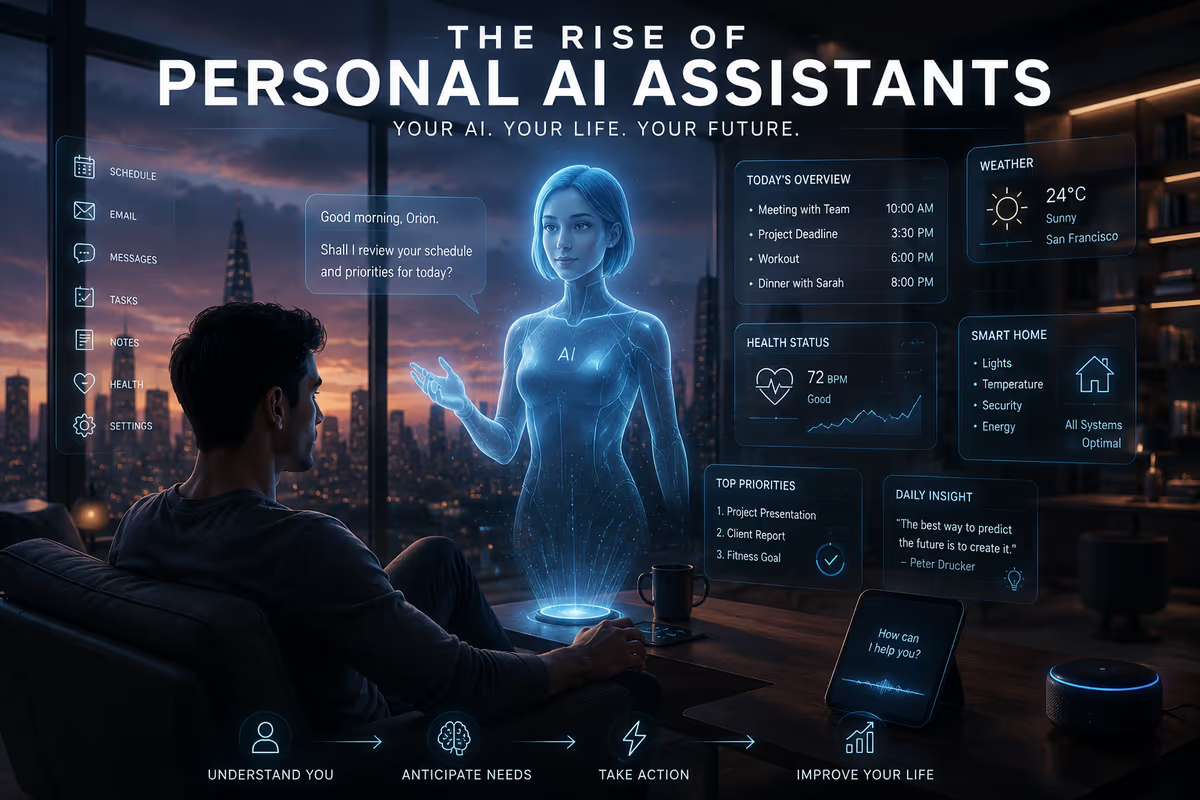
Artificial intelligence is rapidly moving from computers and smartphones into our everyday lives. What once seemed like science fiction—a digital assistant that understands our preferences, remembers important information, manages tasks, and helps us make decisions—is becoming a realistic direction for the next generation of AI.
Personal AI assistants could become one of the most important applications of artificial intelligence.
Instead of simply answering questions when asked, future assistants may continuously understand context, anticipate needs, and help users manage different parts of their digital and physical lives.
What Is a Personal AI Assistant?
A personal AI assistant is an intelligent software system designed to interact with an individual and provide personalized assistance.
Today's assistants can already perform tasks such as:
- Answering questions
- Writing messages
- Summarizing information
- Setting reminders
- Creating documents
- Translating languages
- Generating images
- Helping with programming
However, the next generation will go much further.
Instead of treating every conversation as a separate interaction, personal AI systems could build a long-term understanding of the user's preferences, routines, projects, and goals.
The result would be less like a traditional chatbot and more like a digital companion and intelligent operating layer for everyday life.
From Chatbots to Personal AI
The first generation of AI assistants was largely command-based.
You asked a question, and the system provided an answer.
Modern AI is beginning to change this relationship.
An advanced personal assistant could understand context across multiple tasks. For example, instead of simply answering:
"What's on my schedule today?"
the assistant could analyze the user's calendar, prioritize appointments, identify conflicts, prepare relevant documents, and remind the user about important deadlines.
The difference is significant.
The assistant isn't simply responding.
It is helping manage the situation.
AI That Understands You
Personalization may become one of the defining features of future AI assistants.
An assistant could gradually learn:
- Communication preferences
- Work habits
- Favorite applications
- Frequently used services
- Long-term projects
- Daily routines
- Preferred languages
- Information preferences
This could make interactions much more natural.
Instead of repeatedly explaining what you want, the AI could already understand the context.
For example:
"Prepare the report like last time, but make it shorter."
A future personal AI could know exactly which report, which format, and what "shorter" means based on previous interactions.
Personal AI and Productivity
One of the biggest advantages of AI assistants will be productivity.
Imagine starting your day and receiving an intelligent briefing:
Good morning. You have three important tasks today. Your meeting has moved to 10:30 AM, your project deadline is tomorrow, and I prepared a summary of the documents you need.
Instead of manually checking multiple applications, the assistant could combine information from calendars, emails, documents, messages, and task managers.
This could save enormous amounts of time.
AI Assistants Could Take Action
The most important evolution may be the transition from AI that answers to AI that acts.
Future assistants could potentially perform tasks such as:
- Booking appointments
- Organizing travel
- Comparing products
- Managing schedules
- Preparing reports
- Sending approved emails
- Organizing files
- Monitoring projects
- Controlling smart-home devices
The user would still remain in control, but the AI could handle many repetitive digital tasks.
This is where personal AI becomes significantly more powerful than a traditional chatbot.
Personal AI in the Home
The future personal assistant may not live exclusively inside a smartphone.
It could exist across an entire smart environment.
A home assistant could coordinate:
- Lighting
- Temperature
- Security
- Entertainment
- Appliances
- Energy consumption
- Personal schedules
Imagine arriving home after a long day and having the environment automatically adjust to your preferences.
The lights turn on.
The temperature changes.
Your preferred music begins playing.
Your AI assistant summarizes important messages.
The experience becomes less about controlling individual devices and more about interacting with one intelligent system.
AI Assistants and Humanoid Robots
Personal AI could eventually move beyond screens.
As humanoid robots become more capable, the same AI assistant that currently exists on a computer or smartphone could potentially control a physical robotic platform.
This creates a fascinating possibility.
Your personal AI could have:
A digital presence on your phone and computer.
A voice through speakers and headphones.
A visual presence through augmented or virtual reality.
A physical presence through a humanoid robot.
The assistant would no longer simply exist inside software.
It could become part of the physical world.
The Importance of Memory
Long-term memory may be one of the most important technologies behind personal AI.
Imagine an assistant that remembers a project you started six months ago, understands why you made certain decisions, and can immediately continue where you stopped.
Instead of repeatedly providing background information, the user could simply say:
"Let's continue the project we discussed last month."
The AI could retrieve the relevant context and continue working.
However, memory also creates major privacy responsibilities.
Users should be able to understand what their AI remembers, control that information, and delete it when necessary.
Privacy and Security
The more an AI assistant knows about a person, the more important security becomes.
A personal AI could potentially have access to extremely sensitive information, including calendars, documents, communications, financial information, and personal preferences.
This creates an important principle:
The smarter the assistant becomes, the stronger its security must become.
Future personal AI systems will need strong encryption, transparent privacy controls, permission management, and clear boundaries between what an AI can observe and what it can access.
Convenience should never come at the cost of personal control.
Will Personal AI Replace Apps?
Possibly—but not completely.
Instead of opening ten different applications to complete a task, users could eventually communicate with a single AI interface.
For example:
"Find me a flight, compare the options, check my calendar, and prepare the best itinerary."
The AI could interact with multiple services behind the scenes.
The user would interact primarily with the assistant rather than navigating every application manually.
This could fundamentally change the way software is designed.
The Future of Personal AI
Over the next decade, personal AI assistants may become increasingly integrated into everyday technology.
Smartphones, computers, vehicles, homes, wearable devices, and eventually robots could all become connected to the same personalized intelligence.
The assistant could understand context across these environments while adapting its behavior to the situation.
Your car could know where you're going.
Your home could understand your routine.
Your computer could understand your projects.
Your AI could connect everything together.
The Challenges Ahead
The future of personal AI is exciting, but it isn't without risks.
Companies must address questions surrounding:
- Data privacy
- AI hallucinations
- Security
- User consent
- Autonomous decision-making
- Dependence on AI
- Digital identity
- Ownership of personal data
There is also a deeper question.
How much control should we give an AI over our lives?
The most useful personal assistant may also become one of the most powerful pieces of software a person ever uses.
That power needs responsible boundaries.
Final Thoughts
Personal AI assistants are evolving from simple digital tools into something much more ambitious.
The future assistant may not simply answer questions.
It may understand context, remember important information, organize our digital lives, anticipate our needs, and perform tasks on our behalf.
Eventually, personal AI could become the central interface connecting humans with software, smart devices, vehicles, and robotics.
The smartphone changed how we interact with information.
The personal AI assistant could change how we interact with technology itself.
The future may not be about having more apps.
It may be about having one intelligent assistant that understands how all of them work together.