
Future & Research
The Next Generation of Drones: How AI Is Changing the Sky
CipherRoot Software5 min read
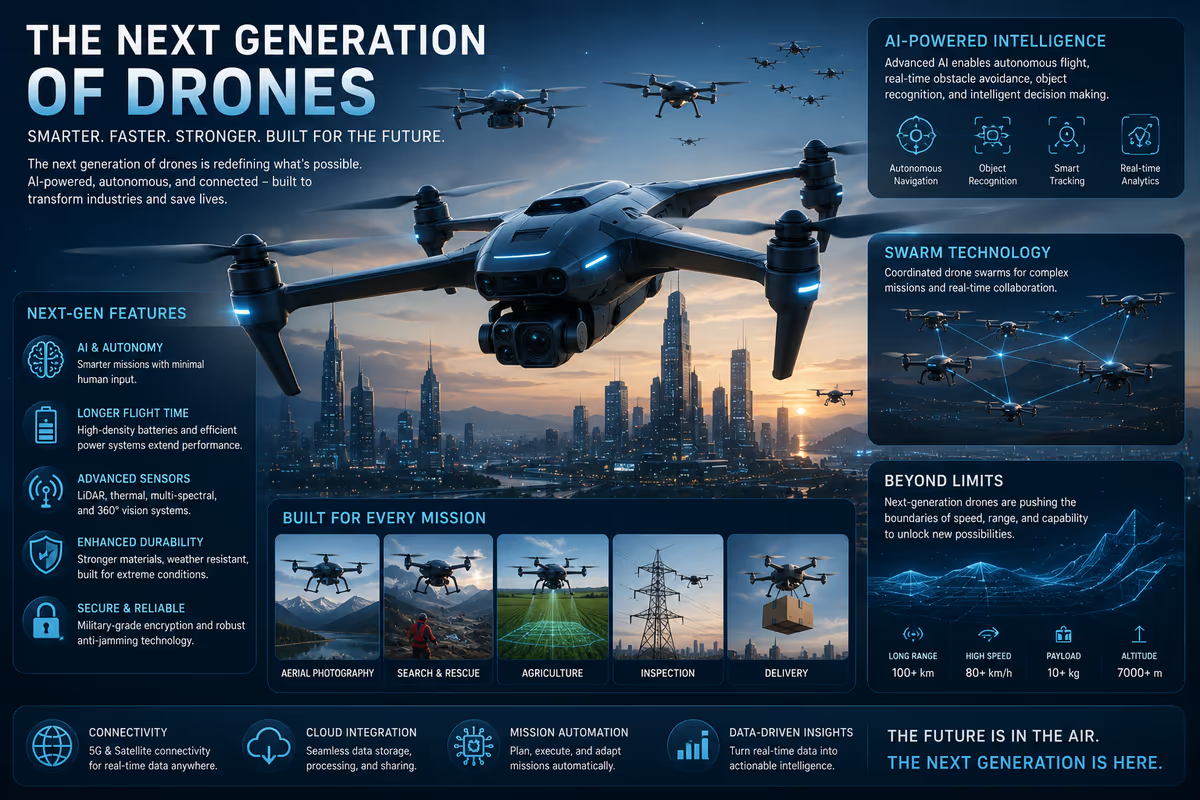
Drones have evolved from remotely controlled flying machines into sophisticated platforms capable of collecting data, navigating complex environments, and performing increasingly autonomous tasks.
The next generation of drones will go even further.
Powered by artificial intelligence, advanced sensors, improved batteries, high-speed connectivity, and autonomous navigation, future drones could transform industries ranging from agriculture and logistics to emergency response and infrastructure inspection.
The drone of the future will not simply fly.
It will see, understand, decide, and act.
From Remote Control to Autonomous Flight
Traditional drones generally require a human operator to control their movements.
Modern AI is changing that model.
Advanced drones can use cameras, sensors, GPS, and onboard computing to understand their surroundings and make navigation decisions.
An autonomous drone could potentially:
- Detect obstacles
- Plan routes
- Identify objects
- Follow moving targets
- Return automatically when battery levels are low
- Adapt to changing environments
- Coordinate with other drones
This reduces the amount of continuous human control required.
AI-Powered Intelligence
Artificial intelligence is becoming one of the most important technologies in drone development.
Computer vision allows drones to analyze images and video in real time.
A drone could distinguish between a person, vehicle, building, animal, or other object and respond according to its mission.
Instead of simply recording everything it sees, an AI-powered drone can analyze the information it collects.
This makes drones much more useful for professional applications.
Advanced Sensors
Future drones will combine multiple sensors to build a detailed understanding of their surroundings.
These may include:
- High-resolution cameras
- LiDAR
- Thermal cameras
- Radar
- Multispectral sensors
- GPS
- Inertial measurement systems
Combining multiple sources of information allows drones to operate more reliably in difficult environments.
For example, thermal imaging could help locate people during search-and-rescue missions even when visibility is poor.
Longer Flight Times
Battery technology remains one of the biggest limitations for conventional drones.
Future improvements in battery density, lightweight materials, aerodynamic design, and energy management could significantly extend flight times.
AI can also help conserve energy by optimizing flight paths and avoiding unnecessary movements.
Longer endurance could make drones more practical for long-distance inspection, environmental monitoring, agriculture, and logistics.
Drone Swarms
One of the most fascinating developments is drone swarm technology.
Instead of operating a single drone, multiple drones can potentially work together as a coordinated network.
A swarm could divide a large mission into smaller tasks.
For example, during a search-and-rescue operation, dozens of drones could simultaneously scan different areas while sharing information with one another.
This could dramatically increase coverage and reduce the time required to complete complex missions.
Search and Rescue
Drones are particularly valuable during emergencies.
After earthquakes, floods, wildfires, or other disasters, damaged infrastructure can make certain areas dangerous for humans.
Autonomous drones could quickly survey affected areas and provide information to emergency teams.
Thermal cameras could help locate people.
AI could analyze aerial imagery and identify damaged buildings or blocked roads.
This could give rescue teams valuable information before entering dangerous environments.
Agriculture
Agriculture is another field where drones are becoming increasingly important.
AI-powered agricultural drones can analyze crops and identify potential problems.
Multispectral imaging can reveal differences in plant health that may not be visible to the human eye.
Future systems could help farmers identify:
- Water stress
- Crop diseases
- Nutrient deficiencies
- Pest activity
- Irrigation problems
Drones could then help apply treatments precisely where they are needed, reducing waste and improving efficiency.
Infrastructure Inspection
Maintaining bridges, power lines, wind turbines, pipelines, and other infrastructure can be expensive and dangerous.
Drones can inspect these structures without requiring workers to physically access every difficult location.
AI can analyze collected images and identify potential cracks, corrosion, damage, or unusual patterns.
This could make inspections faster while reducing risks to human workers.
Autonomous Delivery
Delivery drones could also become more common.
Instead of requiring a human pilot for every flight, autonomous systems could navigate predefined routes and deliver packages directly to designated locations.
AI could help drones avoid obstacles, manage routes, and respond to changing conditions.
However, widespread autonomous delivery will depend on regulations, safety standards, airspace management, and public acceptance.
Connectivity and the Cloud
Future drones will increasingly operate as connected computing platforms.
High-speed wireless networks and satellite connectivity could allow drones to communicate with cloud systems and other machines.
A drone could collect information in the field, transmit important data to a remote server, and receive updated instructions almost immediately.
This creates a powerful combination:
Drone + AI + Connectivity + Cloud Computing
Together, these technologies can turn a flying machine into an intelligent mobile data platform.
The Challenges Ahead
The future of drones is exciting, but significant challenges remain.
Battery limitations, weather conditions, airspace regulations, cybersecurity, privacy, and reliability all need to be addressed.
Autonomous drones must also be able to make safe decisions when unexpected situations occur.
As drones become increasingly independent, regulations will need to determine where they can fly, how they should identify themselves, and what responsibilities operators and manufacturers have.
Security will also become increasingly important as drones become connected to digital networks.
The Future of Autonomous Drones
Over the next decade, drones could become much more common in everyday infrastructure.
They may inspect buildings, monitor forests, assist emergency services, support farmers, transport packages, and collect environmental data.
Some drones may operate with minimal human intervention for hours or even days.
The most advanced systems could continuously learn from their environments and improve their performance over time.
The sky itself could become an intelligent network of autonomous machines.
Final Thoughts
The next generation of drones will be defined by intelligence rather than simply flight capability.
AI will allow drones to understand their surroundings, make decisions, coordinate with other machines, and perform increasingly complex missions.
From saving lives during disasters to improving agriculture and inspecting critical infrastructure, autonomous drones could become an important part of the modern technological ecosystem.
The drone revolution is moving beyond remote control.
The future is autonomous. The future is connected. And increasingly, the future is in the air.