
Future & Research
The Future of Smart Cities: How Technology Will Transform Urban Life
CipherRoot Software6 min read
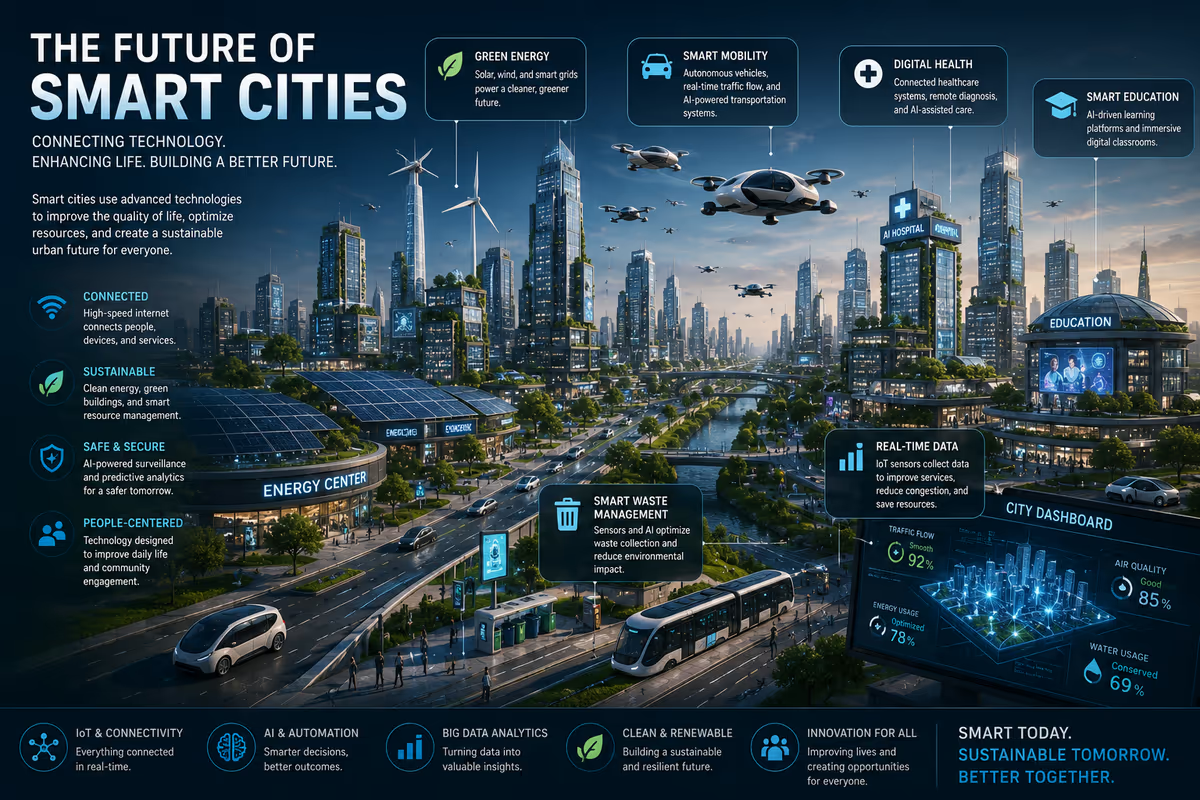
Cities are growing faster than ever. As populations increase and urban areas become more crowded, governments and technology companies are looking for new ways to make cities safer, cleaner, more efficient, and easier to live in.
This is where smart cities come into the picture.
A smart city combines artificial intelligence, connected devices, renewable energy, autonomous transportation, advanced communications, and real-time data to improve urban life.
The goal is not simply to build cities filled with technology.
The goal is to build cities that work better for the people who live in them.
What Is a Smart City?
A smart city uses connected technologies to monitor infrastructure, analyze information, and improve services.
Sensors and connected devices can collect information about:
- Traffic
- Energy consumption
- Air quality
- Water usage
- Public transportation
- Waste collection
- Parking
- Public safety
Artificial intelligence can then analyze this information and help city authorities make better decisions.
Instead of reacting to problems after they occur, cities can increasingly predict problems and respond before they become serious.
Artificial Intelligence at the Center
AI will play a major role in future smart cities.
Millions of sensors could continuously generate information about what is happening throughout an urban environment.
AI systems can analyze this data and identify patterns.
For example, if traffic begins increasing on a particular road, an intelligent transportation system could automatically adjust traffic signals or recommend alternative routes.
The same principle can be applied to energy, water management, public transportation, and emergency services.
Smarter Transportation
Transportation is one of the biggest challenges facing modern cities.
Traffic congestion wastes time, increases fuel consumption, and contributes to pollution.
Smart cities could address these problems through:
- Autonomous vehicles
- Intelligent traffic lights
- AI-powered traffic management
- Electric public transportation
- Smart parking systems
- Vehicle-to-infrastructure communication
- Real-time navigation
Future vehicles may communicate with traffic infrastructure and with one another.
Instead of thousands of independent cars making individual decisions, transportation could become a coordinated intelligent network.
Autonomous Public Transportation
Public transportation could become increasingly automated.
Autonomous buses, trains, and shuttle services could operate according to real-time demand.
If an area suddenly experiences increased passenger traffic, an intelligent transportation system could automatically deploy additional vehicles.
This could make public transportation more efficient while reducing unnecessary trips.
Clean Energy and Smart Grids
Energy will be another critical part of future cities.
Smart buildings and electrical grids can monitor energy consumption in real time.
Artificial intelligence can predict demand and optimize energy distribution.
Cities could increasingly combine:
- Solar power
- Wind energy
- Battery storage
- Smart electrical grids
- Electric vehicles
- Energy-efficient buildings
Buildings could automatically reduce energy consumption when demand is high and increase usage when renewable energy is abundant.
Intelligent Buildings
Future buildings may behave more like intelligent systems than traditional structures.
Sensors could monitor temperature, lighting, air quality, energy consumption, and occupancy.
AI could automatically adjust building systems according to how people use the space.
For example, an office could reduce heating and lighting in empty rooms while maintaining comfortable conditions in occupied areas.
This could reduce energy waste while improving comfort.
Smart Healthcare
Smart cities could also transform healthcare.
Connected devices could monitor patients remotely and provide healthcare professionals with real-time information.
AI systems could help identify unusual health patterns and alert medical teams when additional attention may be required.
Hospitals could use intelligent systems to manage resources, optimize patient flow, and reduce waiting times.
Healthcare could gradually move from a system focused primarily on treatment toward one that places greater emphasis on prevention.
Intelligent Waste Management
Waste collection is another area where technology can make a major difference.
Smart waste containers equipped with sensors could report their fill levels.
Instead of following fixed collection schedules, garbage trucks could be dispatched according to actual demand.
AI could optimize collection routes, reducing unnecessary fuel consumption and improving efficiency.
Over time, cities could also use technology to increase recycling and improve resource management.
Real-Time Environmental Monitoring
Air pollution, water quality, noise, and temperature can all be monitored using connected sensors.
A smart city could continuously analyze environmental conditions and identify areas requiring attention.
Citizens could potentially access real-time information about air quality and other environmental conditions through public digital platforms.
This would make environmental problems easier to detect and address.
The Role of 5G and Future Networks
Smart cities depend on communication.
Millions of connected devices need reliable networks to exchange information.
High-speed networks such as 5G—and future generations of wireless technology—could provide the connectivity required for autonomous vehicles, smart infrastructure, sensors, and real-time services.
The more connected a city becomes, the more important reliable communication infrastructure will be.
Security and Privacy
Smart cities also create serious questions about privacy and cybersecurity.
A city filled with cameras, sensors, connected vehicles, and intelligent systems could potentially collect enormous amounts of information.
Citizens need to know:
- What information is being collected?
- Why is it being collected?
- Who can access it?
- How long is it stored?
- How is it protected?
Smart cities must therefore be designed with privacy and cybersecurity from the beginning.
Technology should improve people's lives without turning cities into environments where citizens feel constantly monitored.
Will Smart Cities Be Better Cities?
Technology alone cannot solve every urban problem.
A city can have autonomous vehicles and intelligent buildings while still suffering from inequality, poor housing, inadequate public spaces, or limited access to essential services.
The best smart cities will therefore combine technology with good urban planning and human-centered policies.
The objective should not be to create the most technologically advanced city.
It should be to create a city where technology genuinely improves everyday life.
What Will Cities Look Like in 2035?
By the mid-2030s, many urban environments could feature much more intelligent infrastructure.
Cars may increasingly drive themselves.
Public transportation could respond dynamically to passenger demand.
Buildings could automatically optimize energy usage.
AI systems could help manage traffic and infrastructure.
Robots could assist with deliveries, maintenance, and waste collection.
Digital healthcare could become more accessible.
Renewable energy could become a larger part of urban power systems.
The city itself could become a connected ecosystem.
The Human-Centered Smart City
The ultimate purpose of smart-city technology should remain simple:
Make people's lives better.
Technology should reduce wasted time, improve safety, lower pollution, increase accessibility, and make essential services more efficient.
The most successful cities of the future will not necessarily be the ones with the most technology.
They will be the ones that use technology intelligently.
Final Thoughts
The future of smart cities represents the convergence of artificial intelligence, robotics, renewable energy, autonomous transportation, cloud computing, and connected infrastructure.
As these technologies mature, cities could become more efficient, sustainable, and responsive than ever before.
But the transition must be handled carefully.
Privacy, cybersecurity, accessibility, and human needs must remain at the center of urban development.
The city of the future should not feel like a machine.
It should feel like a better place to live.
Smart today. Sustainable tomorrow. Better together.