
Future & Research
The Future of Self-Driving Cars: How Autonomous Vehicles Will Change Transportation Forever
CipherRoot Software4 min read
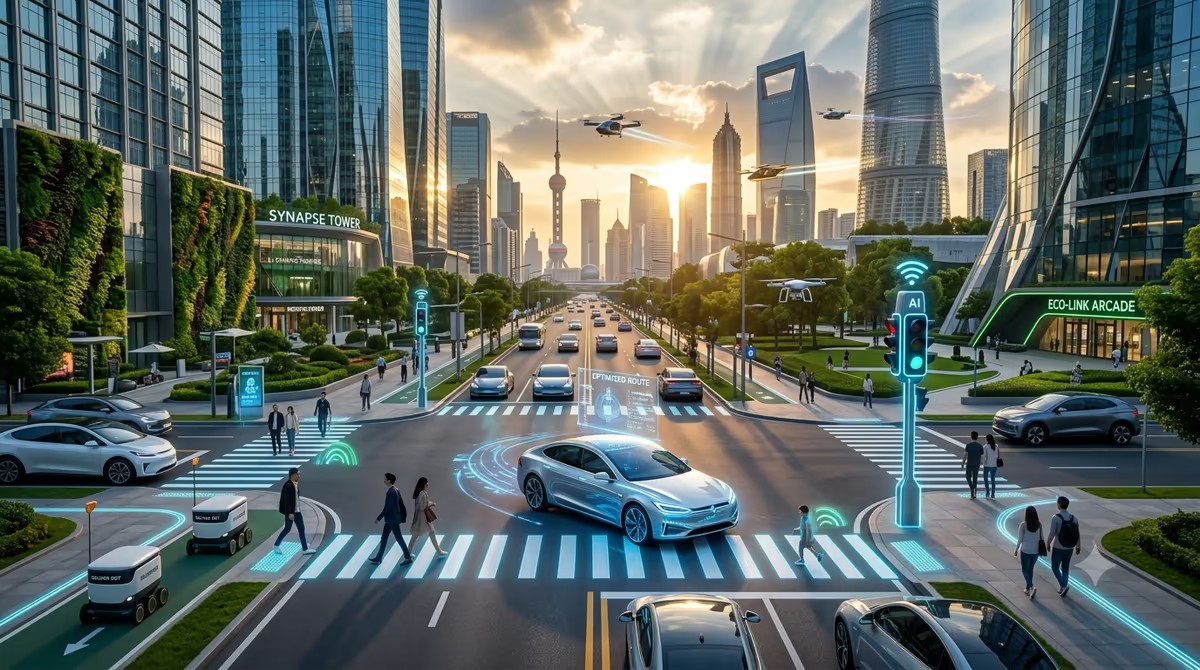
For more than a century, driving has depended almost entirely on human skill. Every journey requires constant attention, quick decision-making, and the ability to react to changing road conditions. However, advances in artificial intelligence are reshaping the future of transportation.
Self-driving cars are no longer just a futuristic concept. Today, autonomous vehicles are being tested on public roads, delivering goods, transporting passengers, and learning from millions of kilometers of driving data.
As artificial intelligence continues to improve, self-driving technology could become one of the most significant innovations of the twenty-first century.
What Are Self-Driving Cars?
Self-driving cars, also known as autonomous vehicles, are capable of navigating roads with little or no human intervention.
Instead of relying solely on a driver, these vehicles combine multiple advanced technologies, including:
- Artificial Intelligence
- Computer Vision
- Radar Systems
- LiDAR Sensors
- GPS Navigation
- High-Precision Maps
- Machine Learning
Together, these technologies allow vehicles to understand their surroundings and make driving decisions in real time.
How Artificial Intelligence Makes Driving Possible
Artificial intelligence acts as the brain of an autonomous vehicle.
Every second, AI processes enormous amounts of information from cameras and sensors surrounding the vehicle.
The system can instantly recognize:
- Other vehicles
- Pedestrians
- Cyclists
- Road signs
- Traffic lights
- Construction zones
- Weather conditions
- Lane markings
Based on this information, the AI continuously predicts what might happen next and safely adjusts steering, speed, and braking.
Unlike humans, AI never becomes tired, distracted, or emotionally affected while driving.
Improving Road Safety
Human error remains one of the leading causes of traffic accidents worldwide.
Distractions, fatigue, speeding, and impaired driving contribute to millions of accidents every year.
Autonomous driving systems have the potential to reduce these risks by constantly monitoring the road and reacting within milliseconds.
Although today's technology is not perfect, future AI systems may significantly reduce traffic accidents and improve overall road safety.
Smarter Cities Through Autonomous Transportation
Self-driving cars will influence more than individual vehicles—they will transform entire cities.
Future smart cities may feature:
- AI-controlled traffic management
- Connected traffic lights
- Intelligent parking systems
- Vehicle-to-vehicle communication
- Real-time traffic optimization
- Reduced traffic congestion
Cars will communicate with one another, sharing road conditions and helping prevent accidents before they occur.
This connected ecosystem could make transportation faster, safer, and more efficient.
Environmental Benefits
Many autonomous vehicles are expected to be fully electric.
AI can optimize acceleration, braking, and route planning to reduce unnecessary energy consumption.
Smarter traffic management may also reduce idle time and traffic congestion, lowering overall emissions.
Combined with renewable energy and electric vehicle infrastructure, autonomous transportation could contribute to cleaner and more sustainable cities.
Challenges Facing Self-Driving Technology
Despite rapid progress, several important challenges remain.
Extreme weather conditions can reduce sensor performance.
Construction zones and unexpected road hazards require sophisticated decision-making.
Cybersecurity remains a major concern, as connected vehicles must be protected against unauthorized access.
Legal responsibility also presents difficult questions.
If an autonomous vehicle causes an accident, determining responsibility between manufacturers, software developers, and vehicle owners becomes increasingly complex.
Governments worldwide continue developing regulations to address these issues.
The Role of AI in Everyday Transportation
Self-driving technology extends beyond personal vehicles.
Artificial intelligence is also transforming:
- Public transportation
- Autonomous buses
- Freight trucks
- Taxi services
- Delivery vehicles
- Emergency response vehicles
As automation expands, transportation networks may become more reliable, efficient, and accessible for millions of people.
Looking Toward the Future
Over the next decade, autonomous driving technology is expected to become increasingly common.
Initially, self-driving systems will operate in controlled environments and urban areas with advanced infrastructure.
As artificial intelligence continues to learn from billions of kilometers of driving experience, autonomous vehicles will become safer and more capable.
Future families may own vehicles that drive themselves, pick up children from school, deliver groceries, or transport elderly passengers without requiring anyone behind the wheel.
Transportation may gradually shift from human-operated vehicles to intelligent mobility systems connected through artificial intelligence.
Final Thoughts
Self-driving cars represent far more than an evolution in automotive technology.
They represent a fundamental shift in how people move, work, and interact with transportation.
Powered by artificial intelligence, advanced sensors, and continuous machine learning, autonomous vehicles have the potential to reduce accidents, improve mobility, decrease emissions, and reshape modern cities.
While technical, legal, and ethical challenges still remain, progress continues at an extraordinary pace.
The road ahead is becoming increasingly intelligent—and the future of transportation may soon drive itself.