
Future & Research
The Future of Renewable Energy: Powering a Cleaner World
CipherRoot Software8 min read
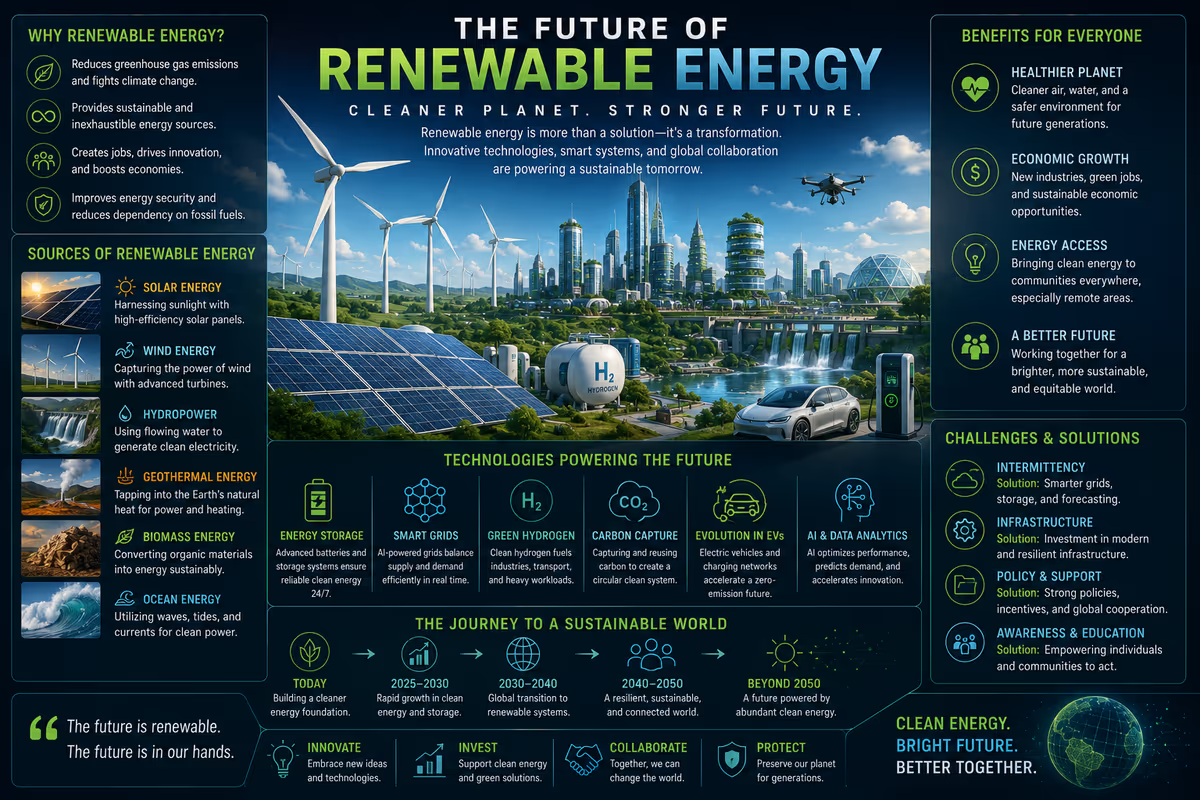
The global energy system is entering a major transformation.
For more than a century, modern civilization has relied heavily on fossil fuels to power transportation, industry, homes, and cities. But growing energy demand, environmental concerns, technological advances, and falling costs for renewable technologies are accelerating the transition toward cleaner sources of energy.
Solar panels are becoming more efficient. Wind turbines are becoming larger and more capable. Battery storage is improving. Electric vehicles are expanding. Artificial intelligence is helping optimize energy networks.
The future of energy will not depend on a single technology.
It will be built from a combination of renewable generation, energy storage, smart grids, advanced batteries, hydrogen, electrification, and intelligent software.
What Is Renewable Energy?
Renewable energy comes from sources that are naturally replenished.
The major sources include:
- Solar energy
- Wind energy
- Hydropower
- Geothermal energy
- Biomass
- Ocean and tidal energy
Unlike finite fossil-fuel resources, renewable energy sources can continuously provide energy when properly developed and managed.
Solar Energy: Power From the Sun
Solar power is one of the most promising components of the future energy system.
Solar panels convert sunlight into electricity, allowing homes, businesses, industrial facilities, and large power plants to generate clean energy.
One of the biggest advantages of solar technology is flexibility.
Solar panels can be installed on:
- Rooftops
- Industrial buildings
- Parking areas
- Large solar farms
- Remote locations
- Infrastructure projects
As solar technology continues to improve, electricity generation from sunlight could become an increasingly important part of global energy systems.
The Next Generation of Wind Power
Wind energy has also evolved significantly.
Modern wind turbines are dramatically larger and more efficient than early designs.
Wind farms can generate substantial amounts of electricity, particularly in regions with strong and consistent winds.
Offshore wind is especially interesting because oceans provide large areas for development and can offer strong wind resources.
Future turbines could become even larger, more efficient, and increasingly integrated with advanced monitoring systems.
Hydropower
Hydropower remains an important renewable energy technology.
Moving water can be used to generate electricity through turbines.
One major advantage of hydropower is that some facilities can provide electricity on demand and, in certain configurations, support grid balancing and energy storage.
However, large hydroelectric projects can also have significant environmental and social impacts.
Future energy planning will therefore need to balance electricity generation with ecosystem protection.
Geothermal Energy
Deep beneath the Earth's surface is an enormous amount of heat.
Geothermal technologies can use this heat for electricity generation and heating.
Unlike solar and wind, geothermal energy can provide relatively consistent output where suitable resources are available.
This makes it potentially valuable as part of a diversified renewable-energy system.
The Biggest Challenge: Energy Storage
Renewable energy creates a unique challenge.
The sun does not always shine.
The wind does not always blow.
Electricity demand, however, continues throughout the day and night.
This makes energy storage extremely important.
Advanced batteries can store electricity when renewable generation is high and release it when demand increases.
Future energy systems could combine:
Solar + Wind + Batteries + Smart Grids
to create more reliable electricity networks.
The Evolution of Batteries
Battery technology is developing rapidly.
Lithium-ion batteries currently dominate many applications, but researchers are investigating additional technologies, including solid-state batteries and other advanced storage systems.
Future batteries could potentially offer improvements in:
- Energy density
- Charging speed
- Lifespan
- Safety
- Cost
- Resource efficiency
Better batteries will not only support renewable energy.
They will also accelerate the transition toward electric transportation.
Smart Grids
The traditional electricity grid was designed around large centralized power plants.
The future could be much more distributed.
Homes may have solar panels.
Businesses may have batteries.
Electric vehicles could become mobile energy-storage devices.
Buildings could automatically adjust electricity consumption.
Artificial intelligence could analyze demand and generation in real time.
This creates the concept of a smart grid.
Instead of simply delivering electricity, future grids could continuously optimize how electricity is generated, stored, distributed, and consumed.
Artificial Intelligence and Renewable Energy
AI could become one of the hidden technologies behind the renewable-energy revolution.
Machine-learning systems can analyze enormous quantities of information, including:
- Weather patterns
- Electricity demand
- Solar production
- Wind conditions
- Equipment performance
- Battery status
- Grid activity
This information can help operators predict energy production and optimize infrastructure.
The combination of renewable energy and AI could make energy systems significantly more intelligent.
Green Hydrogen
Hydrogen could become another important part of future energy systems.
When hydrogen is produced using electricity from low-carbon sources, it can potentially serve as an energy carrier for applications that are difficult to electrify directly.
Potential applications include:
- Heavy transportation
- Industrial processes
- Chemical production
- Long-duration energy storage
- Certain high-temperature applications
Hydrogen is not a universal replacement for electricity or batteries, but it could complement them in specific sectors.
Renewable Energy and Electric Vehicles
Transportation is another major area of change.
Electric vehicles convert electricity directly into motion and can be powered by increasingly renewable electricity.
Future charging networks could become smarter and more integrated with the electrical grid.
In some systems, vehicle batteries could potentially provide electricity back to the grid when vehicles are connected and authorized to do so.
This concept is often described as vehicle-to-grid technology.
Millions of connected electric vehicles could eventually become a significant distributed energy resource.
Renewable Energy for Remote Communities
Renewable technologies can also improve energy access.
Remote communities that are difficult to connect to large electricity networks could potentially use combinations of:
- Solar panels
- Wind turbines
- Battery storage
- Smart energy-management systems
These smaller systems, sometimes called microgrids, can provide local electricity without requiring a massive centralized infrastructure project.
This could be particularly valuable in remote and underserved regions.
The Future of Energy Storage Beyond Batteries
Batteries are not the only form of energy storage.
Future systems could also use:
- Pumped-storage hydropower
- Thermal storage
- Hydrogen
- Compressed-air storage
- Other emerging technologies
Different storage technologies are suited to different timescales and applications.
A future energy network may therefore use several storage technologies simultaneously.
Renewable Energy and Industry
Heavy industry presents one of the biggest challenges for decarbonization.
Steel, chemicals, cement, shipping, and other industrial sectors require enormous quantities of energy and, in some cases, high temperatures or chemical feedstocks.
Electrification, renewable electricity, green hydrogen, improved efficiency, and carbon-management technologies could all play roles in reducing emissions.
There will probably not be one universal solution.
Different industries will require different combinations of technologies.
The Role of Nuclear Energy
Although nuclear power is not renewable, it may still be part of discussions about the future low-carbon energy system.
Nuclear reactors can provide large quantities of electricity without direct carbon emissions during operation.
The future energy mix may therefore include multiple technologies rather than renewable energy alone.
The central challenge is building an electricity system that is reliable, affordable, resilient, and increasingly low-carbon.
Challenges of Renewable Energy
The transition will not be simple.
Important challenges include:
- Energy storage
- Grid modernization
- Infrastructure costs
- Mining and material requirements
- Land use
- Transmission capacity
- Recycling
- Supply-chain resilience
- Weather variability
Renewable energy is powerful, but building a reliable energy system requires much more than installing solar panels and wind turbines.
The entire infrastructure surrounding energy must evolve.
Recycling the Technologies of Tomorrow
As renewable technologies become more widespread, recycling will become increasingly important.
Solar panels, batteries, wind-turbine components, and electrical equipment contain valuable materials.
Developing efficient recycling and recovery systems can reduce waste and improve resource security.
The future renewable-energy industry therefore needs to think about the entire lifecycle of its technologies—from manufacturing to reuse and recycling.
What Could the Energy System of 2040 Look Like?
A future city could look very different from today's energy infrastructure.
A typical system might include:
Solar panels on buildings → Wind and solar farms → Smart electricity grid → Large-scale energy storage → Electric vehicles → AI-powered energy management → Homes and businesses producing and consuming electricity dynamically
Instead of energy flowing in only one direction, electricity could move between many connected sources, storage systems, buildings, vehicles, and consumers.
A More Decentralized Energy Future
The traditional model was relatively simple:
Power plant → Grid → Consumer
The future could be more complex:
Solar → Home → Battery → Vehicle → Grid → Business → Storage
Consumers could increasingly become producers as well.
A household with solar panels and a battery could generate electricity, store it, consume it, and potentially send excess power back into the grid.
Renewable Energy and the Global Economy
The transition to renewable energy will also create new industries.
Demand could increase for:
- Solar manufacturing
- Wind technology
- Batteries
- Power electronics
- Grid infrastructure
- Energy software
- Electric vehicles
- Hydrogen systems
- Recycling
- Energy-storage technologies
This could create new jobs while transforming existing industries.
The Human Side of the Energy Transition
Technology alone cannot solve every energy problem.
Governments, businesses, engineers, scientists, communities, and consumers all influence how quickly energy systems change.
Education and public understanding will become increasingly important.
People need to understand not only where their electricity comes from, but also how energy is stored, distributed, priced, and consumed.
Final Thoughts
The future of renewable energy is much bigger than solar panels and wind turbines.
It is about creating an intelligent energy ecosystem in which renewable generation, storage, electric transportation, smart grids, AI, and advanced manufacturing work together.
The energy system of the future could be cleaner, more distributed, more automated, and more resilient.
There will be obstacles.
There will be technologies that fail.
There will be unexpected breakthroughs.
But the direction is clear: humanity is moving toward an energy system where electricity can increasingly come from natural processes that continuously replenish themselves.
The future of energy is not simply about producing more power.
It is about producing smarter, cleaner, and more sustainable power for generations to come.